Understanding Macronutrients: Roles in Metabolism
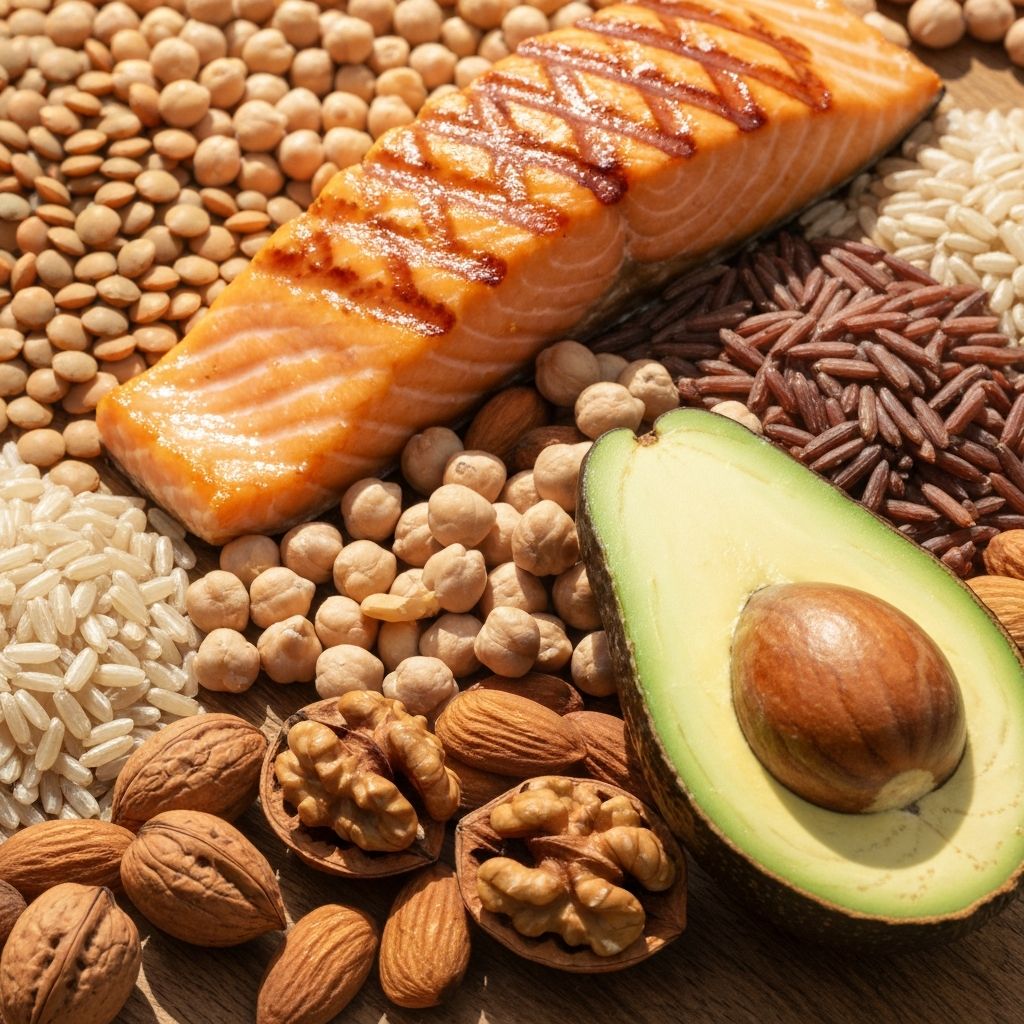
All food consists of three macronutrients: proteins, carbohydrates, and fats. Each plays distinct and essential roles in human physiology. Understanding what these nutrients are and how the body uses them provides important context for nutritional knowledge.
Proteins: Building Blocks and Beyond
Proteins are made up of amino acids, which are organic compounds that the body uses to build and repair tissues. Protein sources include both animal products (meat, fish, poultry, dairy, eggs) and plant-based sources (legumes, nuts, seeds, whole grains).
Functions of Protein
- Building and repairing muscles, skin, hair, and other tissues
- Creating enzymes that catalyze metabolic reactions
- Producing hormones that regulate bodily processes
- Forming antibodies that support immune function
- Transporting nutrients and oxygen throughout the body
- Providing energy when carbohydrates and fats are insufficient
The body breaks down dietary protein into individual amino acids during digestion. These amino acids are then used to synthesise new proteins needed by the body. Some amino acids can be synthesised by the body, while others must be obtained from food—these are called essential amino acids.
Carbohydrates: Energy and Function
Carbohydrates are sugars, starches, and fibres composed of carbon, hydrogen, and oxygen. They are found primarily in plant foods including grains, fruits, vegetables, and legumes. The body converts carbohydrates into glucose, which is used for energy.
Types of Carbohydrates
- Simple carbohydrates: Sugars that are quickly absorbed and rapidly raise blood glucose levels. Found in fruits, honey, and processed foods.
- Complex carbohydrates: Starches and fibres that are digested more slowly. Found in whole grains, legumes, and vegetables.
- Fibre: Carbohydrates that the body cannot fully digest but that play important roles in digestive health and satiety.
Functions of Carbohydrates
- Providing energy for the brain, muscles, and other organs
- Supporting digestive function through fibre
- Sparing protein so it can be used for tissue building rather than energy
- Affecting hormonal responses through glycaemic index and load
- Feeding beneficial bacteria in the gut
The body stores carbohydrate energy as glycogen in the liver and muscles. These glycogen stores provide readily available energy for physical activity and maintain brain function when food intake is limited.
Fats: Essential and Multifunctional
Dietary fats come from both animal sources (meat, dairy, eggs) and plant sources (oils, nuts, seeds, avocados). Contrary to common misconceptions, dietary fat is essential for human health and is not inherently problematic.
Functions of Fat
- Absorbing fat-soluble vitamins (A, D, E, and K)
- Providing energy—fats contain 9 calories per gram compared to 4 for protein and carbohydrates
- Supporting hormone production, including sex hormones and cortisol
- Insulating organs and regulating body temperature
- Supporting brain development and cognitive function
- Reducing inflammation when in appropriate balance
Types of Dietary Fats
- Saturated fats: Primarily from animal sources but also found in some plant oils. Saturated and unsaturated fats both play roles in human physiology.
- Unsaturated fats: Found in plant oils, nuts, seeds, and fatty fish. Include monounsaturated and polyunsaturated fats.
- Trans fats: Primarily industrial trans fats found in processed foods. These differ from naturally occurring trans fats in dairy and beef.
Energy Density and Satiety
Macronutrients differ in their energy density. Protein and carbohydrates each provide approximately 4 calories per gram, while fats provide 9 calories per gram. This means that fat-containing foods are more energy-dense than equivalent weights of protein or carbohydrate-containing foods.
The satiating effect of different macronutrients varies. Protein and fibre tend to provide greater satiety than highly processed foods. However, individual responses to different foods and macronutrient combinations vary based on personal preferences and metabolism.
Balance and Individual Variation
All three macronutrients are essential for human health. Different people thrive on different combinations of these macronutrients based on their individual circumstances, genetics, activity level, and preferences. There is no single "optimal" macronutrient ratio that works for all people.
Key Takeaways
- Proteins are essential for tissue building and countless physiological functions
- Carbohydrates provide energy and support digestive health
- Fats are essential for hormone production, vitamin absorption, and many other functions
- All three macronutrients are necessary for health
- Individual macronutrient needs vary based on personal circumstances
- Quality of food sources matters alongside macronutrient composition
Educational content only. No promises of outcomes.
This article presents general scientific information for educational purposes. It does not constitute medical or nutritional advice and is not personalised to individual circumstances. For guidance specific to your individual situation, consult qualified healthcare professionals.